28 October 2026 — Secure House Admin
Fire Resistant Doors Flats Need: What Property Owners and Managers Should Know
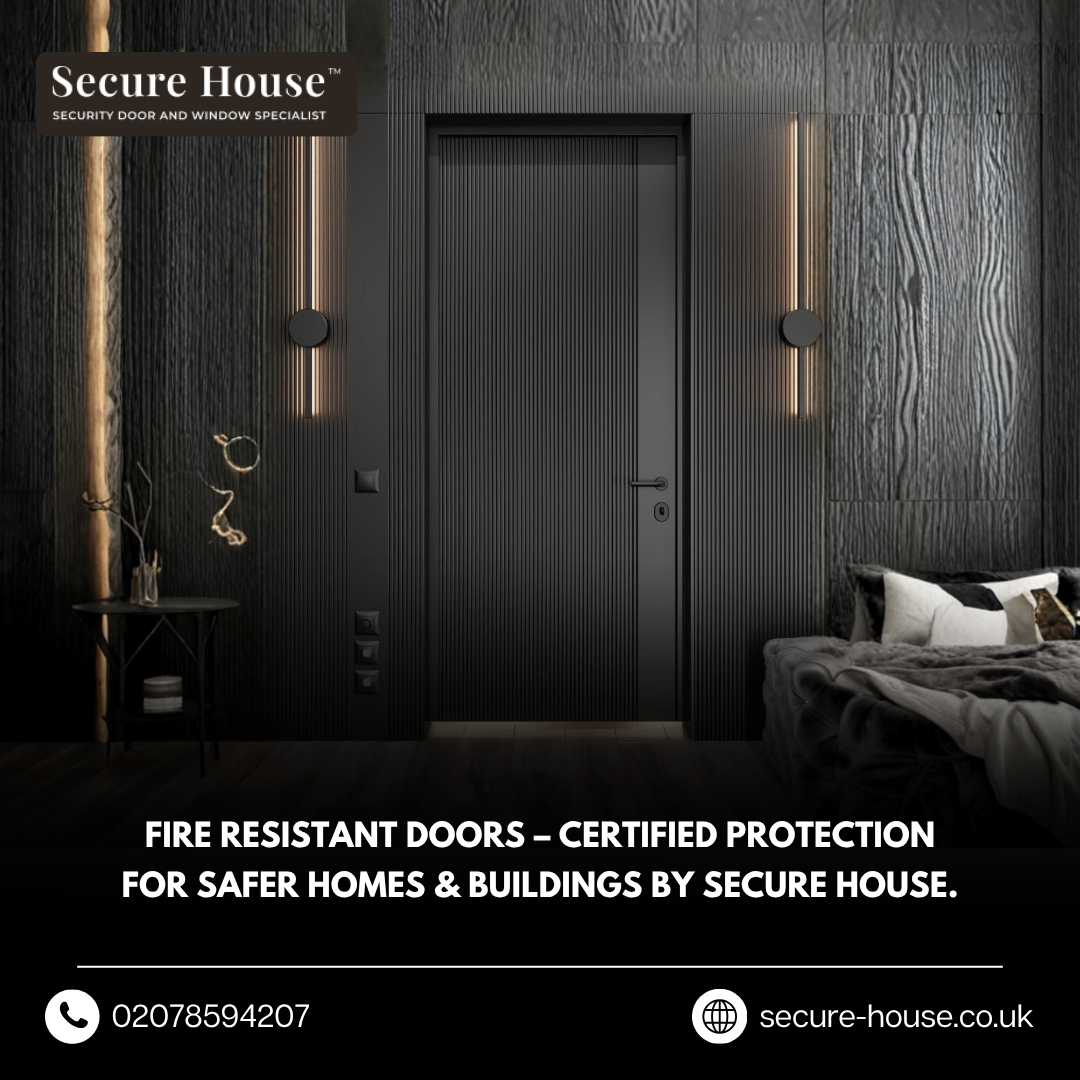
A search for fire resistant doors flats usually has a practical aim: to understand which doors in a block must resist fire, what the ratings mean and who is responsible for keeping them compliant. In a block of flats, doors are a main way of keeping a fire in the room or flat where it started and keeping escape routes usable for everyone else.
This guide explains what fire resistant doors are, which rules apply in England, how ratings such as FD30 and FD30S work, and how owners and managers can keep doors in good order. It is general information, not a substitute for a fire risk assessment.
What is a fire resistant door?
A fire resistant door is a complete door set tested to hold back fire and smoke for a stated period. The door only performs as tested when every part is present and working: the leaf, the frame, intumescent seals that expand in heat, smoke seals, correctly fitted hinges, a self-closing device and any glazing or letterbox that is part of the tested design.
The terms "fire door" and "fire resistant door" describe the same thing. What matters is the tested rating and the condition of the whole assembly.
What do FD30, FD30S and FD60 mean?
FD30 means the door is designed to resist fire for at least 30 minutes, and FD60 for at least 60 minutes. The letter S indicates that the door also has smoke seals to limit the passage of cold smoke. Fire resistance may also be expressed using European classifications such as EI30, where E refers to integrity and I to insulation.
Rating
What it generally indicates
Where it is typically used
FD30
At least 30 minutes of fire resistance
Flat entrance doors and some internal doors
FD30S
30 minutes of fire resistance plus smoke seals
Doors where smoke control is also needed, often flat entrance doors
FD60
At least 60 minutes of fire resistance
Higher-risk locations, as set by the fire strategy
Secure House lists FD30 and FD60 ratings on its fire resistant doors page, and states that its communal entrance range is designed to FD30. The rating a building needs comes from its fire strategy and risk assessment, not from a general rule.
Fire resistant doors flats must have: what the rules say
In England, the Regulatory Reform (Fire Safety) Order 2005 requires a fire risk assessment of the common parts of multi-occupied residential buildings. The Fire Safety (England) Regulations 2022 added specific duties on fire doors in these buildings:
Where a building has two or more sets of domestic premises, the responsible person must give residents information about the importance of fire doors.
In buildings over 11 metres in height, the responsible person must check flat entrance doors at least annually and communal fire doors at least quarterly.
For new work and major refurbishment, Approved Document B guidance commonly leads to flat entrance doors with 30 minutes' fire resistance and smoke control. Rules differ in Scotland, Wales and Northern Ireland, and existing buildings depend on their fire risk assessment. Check the current requirements for your building.
Fire doors for flats: flat entrance doors and communal doors
Fire doors for flats fall into two broad groups, and they do slightly different jobs.
Flat entrance doors: these separate each flat from the shared corridor or stair. They help contain a fire inside the flat and protect the escape route for neighbours.
Communal fire doors: these sit on stairs, corridors, lobbies and plant or storage rooms. They keep the escape route usable and separate areas of different risk.
Secure House states that communal flat entrance steel doors forming part of a fire compartment must be fire doors, and it offers fire-rated options in its communal entrance doors range.
What should residential fire doors have?
A compliant residential fire doors installation normally includes the following:
Third-party certification for the complete door set, with a label or plug identifying the product.
Intumescent strips and, where specified, smoke seals fitted in the leaf or frame.
Correctly rated hinges, usually three, fitted as the test evidence requires.
A self-closing device that closes the door fully from any open position.
Fire-rated glazing, if there is any glass, installed to the tested design.
Tight, even gaps around the leaf, kept within the limits in the test evidence.
A fire-rated letterbox and ironmongery that match the certified door set.
Security hardware must not weaken the fire rating. If you also need burglar resistance, ask for evidence that the same door set was tested for both. Secure House describes fire-rated security door options within its wider doors range.
Common problems found with fire doors in flats
Doors wedged open or with closers removed.
Damaged, painted-over or missing seals.
Gaps that are too wide because the door has dropped or the frame has moved.
Closers that no longer pull the door fully shut.
Doors cut down, drilled or fitted with extra hardware that is not part of the tested design.
Replacement doors fitted without evidence of certification.
A quick check can catch many faults: the door should close itself fully, the gaps should be small and even, the seals should be intact and nothing should hold the door open.
Who is responsible for flat entrance doors?
Responsibility can be shared. The responsible person for the building has duties under fire safety law, which in practice usually means the landlord, freeholder or managing agent. In leasehold flats, the lease may place the flat entrance door with the leaseholder or with the landlord, so check the lease. Residents should never remove closers, wedge doors open or replace the door without agreement.
How to choose and replace flat entrance doors
Confirm the required rating from the fire risk assessment or fire strategy.
Ask for third-party certification covering the complete door set, including glazing and hardware.
Check any security, acoustic and thermal requirements alongside the fire rating.
Use a competent installer who can follow the test evidence.
Keep certificates, installation records and inspection logs together.
Managers handling multiple blocks can find supply details on the trade page.
Frequently Asked Questions
Do all flat entrance doors have to be fire doors?
In new work, flat entrance doors commonly need to be fire doors, usually with 30 minutes' resistance. For existing buildings, the fire risk assessment decides. When in doubt, ask a competent fire risk assessor.
What does FD30S stand for?
FD30S describes a door with 30 minutes of fire resistance and smoke seals. The S shows that the door also limits the passage of smoke.
How often should fire doors in flats be checked?
In England, for buildings over 11 metres, flat entrance doors must be checked at least annually and communal fire doors at least quarterly. Many managers check more often in busy buildings.
Can I replace my own flat entrance door?
Only if your lease and the building's fire strategy allow it, and only with a certified fire door set installed correctly. An uncertified replacement can reduce the building's fire safety.
Can fire doors also be security doors?
Yes, provided the door set is tested and certified for both. Adding security hardware to a fire door without evidence can invalidate its rating.